
Oversight’s key to ensure sustainability in outer space: Guterres

Source: United Nations 3

“Our common interest in preserving the domain of outer space, a province of humankind that benefits us all, requires agile and multi-stakeholder governance responses,” he wrote in the introduction. 

The policy brief examines some of the “unprecedented” changes underway in outer space, including the sheer volume of satellites being launched into orbit, the participation of the private sector, and the return of astronauts to deep space after more than half a century. 

It outlines major trends that are impacting “space sustainability” and their effect on realizing the SDG promise of a more just, equitable and greener planet down below, by 2030, while also assessing the risks if these challenges are not solved. 

Satellites and space tourism 

The past decade has seen an exponential increase in the number of satellites launched into outer space – from 210 in 2013 to 2,470 last year – and mainly by private companies.   

The period was also marked by a rapid expansion in the number of private missions to space, including the first commercial mission to the International Space Station, which took place in 2021.  

The number of planned private missions for communications, resource activities, space tourism and science is also rising, according to the report. While the United States has led the sector, many new commercial space companies have emerged in China, India and Japan. 

Although humans have not been to deep space since the final flight of the Apollo programme in 1972, the report points to a “new era” of exploration. For example, United States space agency NASA is planning a manned flight around the moon in 2024, while the American private company Space X wants to send a crew of artists to deep space on an reusable transportation system known as Starship.

Rise in risks 

While these developments have the potential to unlock enormous opportunity for humanity, the report warns that they could also exacerbate risks.  

“The rapid increase in the number of objects and frequency of missions to outer space brings a corresponding increase in the risks of accident, collision and debris,” it said.  

“This issue will become increasingly relevant as space actors conduct new and  novel missions such as debris removal, in-orbit servicing and manufacturing and space tourism.” 

A shared responsibility 

The report concludes with the Secretary-General’s recommendations for harnessing the potential of outer space for achieving the SDGs. 

“It is our shared responsibility to ensure that existing international space law is fully implemented, and that effective governance is in place to propel innovation and mitigate risks,” it said. 

One option calls for the UN Committee on the Peaceful Uses of Outer Space to develop a unified regime for space sustainability

Space traffic 

“Such a regime…would foster transparency, confidence-building and the interoperability of space operations in Earth orbit and beyond, including on  the Moon and other celestial bodies.”  

Alternatively, the Committee could consider developing new governance frameworks for various areas of space sustainability, such as space traffic management, space debris removal and space resource activities. 

Space for women 

UN entities are also urged to boost efforts to advance the equal participation of women in the aerospace sector, including through programmes that promote science, technology, engineering and mathematics (STEM) education for girls. 
UN commends Criminal Tribunal for former Yugoslavia, as final judgement is delivered

Source: United Nations 2

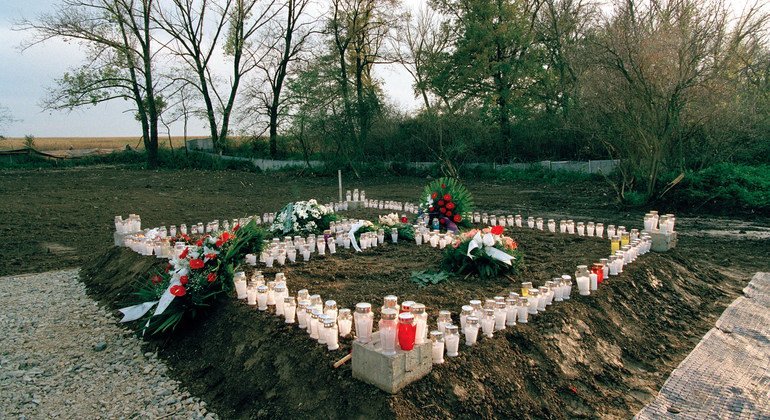
Jovica Stanišić and Franko Simatović were convicted by the court – part of the International Residual Mechanism for Criminal Tribunals (IRMCT) which took over from the ICTY – in 2021, for their roles training death squads accused of ethnic cleansing during the conflict that saw the breakup of the former Yugoslavia in the early 1990s.

The two were originally sentenced to 12 years by the court in 2021, but Wednesday’s appeal judgement against them, increased that to 15 years, on the grounds that they were “liable as members of a joint criminal enterprise for crimes committed by various Serb forces in Bosnia and Herzegovina in 1992”, as well as responsible for murder, in the same year.

Justice for the victims

In a statement, UN Spokesperson Stéphane Dujarric said that Secretary-General António Guterrestakes note of this appeal and extends his thoughts to the victims, and survivors and their families who have suffered from the crimes for which both defendants have been found guilty.”

The judgement marks the end of the final case relating to “core crimes” that the Mechanism inherited from the ICTY, which was established in 1993 to prosecute suspected war criminals.

The IRMCT Chief Prosecutor, Serge Brammertz, said that the decision demonstrated that the international community, “when united, can deliver justice to the victims and hold the most senior perpetrators responsible for their crimes.

Remembering the victims and survivors, and sheer courage of witnesses who have come forward, he added that there were still thousands of war crimes suspects throughout the former Yugoslavia, “who remain to be prosecuted.”

“We will continue our intensive efforts to provide assistance to national counterparts, to ensure that more justice is achieved for more victims.”

Truth triumphs

UN High Commissioner for Human Rights Volker Türk, also welcomed Wednesday’s final judgement, describing the outcome as a major step to establishing the truth and addressing impunity.

“The extraordinary work and legacy of the Mechanism and of the International Criminal Tribunal before it, have not only contributed to establishing truth, justice and accountability over the years but have also powerfully advanced international criminal justice standards globally,” Mr. Türk said.

Like the Secretary-General, the UN rights chief highlighted the courage, resilience and perseverance of survivors and families who, despite appalling trauma, never stopped seeking truth and justice.

“I want to praise, strongly, the survivors and their families, whose suffering is unimaginable but who persisted in demanding their rights,” he said.

He also stressed that many survivors and their families are still awaiting truth, justice and reparations.

Threats continue

Many victims continue to face threats, intimidation, hate speech and revisionist rhetoric, including rejection of the tribunals’ decisions; denials that crimes were committed; justification of atrocities; and the glorification of war criminals.

“Verdicts like today’s, remind us of an awful past to which we must never return.

He urged the authorities, “media outlets and people in Bosnia and Herzegovina, Croatia, Montenegro, Serbia, North Macedonia and Kosovo, to step up efforts to advance truth, justice, reparation and guarantees of non-recurrence.

“Revisionist narratives, genocide denial, divisive rhetoric and hate speech, from any quarter, are unacceptable.”

‘Let’s Put the Ocean First’, Secretary-General Says in Message on World Day, Urging All to Keep Pushing for Conservation, Sustainable Use of Resources

Source: United Nations 4

Following is UN Secretary-General António Guterres’ message for the United Nations World Oceans Day, observed 8 June:

The ocean is the foundation of life.  It supplies the air we breathe and food we eat.  It regulates our climate and weather.  The ocean is our planet’s greatest reservoir of biodiversity.  Its resources sustain communities, prosperity and human health around the world.

Humanity counts on the ocean.  But can the ocean count on us?

We should be the ocean’s best friend.  But right now, humanity is its worst enemy.  Human-induced climate change is heating our planet, disrupting weather patterns and ocean currents, and altering marine ecosystems and the species living there.

Marine biodiversity is under attack from overfishing, over-exploitation and ocean acidification.  Over one third of fish stocks are being harvested at unsustainable levels.  And we are polluting our coastal waters with chemicals, plastics and human waste.

But this year’s World Oceans Day reminds us that the tides are changing.  Last year, we adopted an ambitious global target to conserve and manage 30 per cent of land and marine and coastal areas by 2030, as well as a landmark agreement on fisheries subsidies.

At the United Nations Ocean Conference in Lisbon, the world agreed to push for more positive ocean action.  A global, legally binding agreement to end plastic pollution is under negotiation.  And in March, countries agreed to the historic High Seas Treaty on the conservation and sustainable use of marine biodiversity in areas beyond national jurisdiction.

Realizing the great promise of these initiatives requires collective commitment.  Sustainable Development Goal 14 — to conserve and sustainably use the ocean’s resources — hangs in the balance.  This World Oceans Day, let’s keep pushing for action.  Today and every day, let’s put the ocean first.

Consequences from Plastic Pollution Catastrophic, but Solutions Possible ‘If We Act Now’, Secretary-General Stresses in Message on World Environment Day

Source: United Nations 4

Following is UN Secretary-General António Guterres’ message for World Environment Day, observed 5 June:

This World Environment Day is a call to beat plastic pollution.

Every year, over 400 million tons of plastic is produced worldwide — one third of which is used just once.  Every day, the equivalent of over 2,000 garbage trucks full of plastic is dumped into our oceans, rivers and lakes.

The consequences are catastrophic.  Microplastics find their way into the food we eat, the water we drink, and the air we breathe.  Plastic is made from fossil fuels — the more plastic we produce, the more fossil fuel we burn, and the worse we make the climate crisis.

But we have solutions.  Last year, the global community began negotiating a legally binding agreement to end plastic pollution.  This is a promising first step, but we need all hands on deck.

A new report by the United Nations Environment Programme shows that we can reduce plastic pollution by 80 per cent by 2040 if we act now to reuse, recycle, reorient and diversify away from plastics.

We must work as one — Governments, companies, and consumers alike — to break our addiction to plastics, champion zero waste and build a truly circular economy.  Together, let us shape a cleaner, healthier and more sustainable future for all.

Condemning Military Satellite Launch by Democratic People’s Republic of Korea, Secretary-General Calls on Government to Cease Activity, Resume Dialogue

Source: United Nations 4

The following statement was issued today by the Spokesman for UN Secretary-General António Guterres:

The Secretary-General strongly condemns the military satellite launch conducted by the Democratic People’s Republic of Korea.

Any launch using ballistic missile technology is contrary to the relevant Security Council resolutions.

The Secretary-General reiterates his call on the Democratic People’s Republic of Korea to cease such acts and to swiftly resume dialogue to achieve the goal of sustainable peace and the complete and verifiable denuclearization of the Korean Peninsula.

Early Warnings for All officially becomes WMO’s top priority

Source: World Meteorological Organization

Geneva, 31 May 2023 (WMO) – The groundbreaking international campaign to ensure that everyone on Earth is protected against hazardous weather by life-saving early warning systems by the end of 2027 has been officially recognized as the top overriding priority of the World Meteorological Organization.

“This resolution agrees that the fulfilment of the WMO contribution to the successful implementation of the Early Warnings For All Initiative shall be accorded the highest priority in the WMO Strategic Plan 2024–2027, ” said the World Meteorological Congress resolution.

The 193-Member Congress, which is the WMO’s top decision-making body, said it was mindful of the “ambitious time frame, the complexity of the technological, social and economic aspects, and the urgency implied by the increasing threats and risks from natural hazards.”

It said that key WMO activities should be coordinated and consolidated under the Early Warnings for All umbrella and WMO programmes, technical commissions and regional activities aligned to achieve the goal.

National Meteorological and Hydrological Services are the official and authoritative providers of early warnings for hydrometeorological hazards.

Climate Adaptation

“Multi-hazard early warning systems are an international success story and have saved countless lives. They are widely regarded as the low-hanging fruit of climate adaptation. They are efficient and cost-effective, providing an estimated tenfold return on investment,” said WMO Secretary-General Prof. Petteri Taalas.

“However, only half of countries have early warning systems in place with coverage especially low in Small Island Developing States (SIDS), Least Developed Countries (LDCs) and in Africa. The death toll is disproportionately high in these countries,” he said.

Economic losses increase, death toll falls

Extreme weather, climate and water-related events caused 11 778 reported disasters between 1970 and 2021, with just over 2 million deaths and US$ 4.3 trillion in economic losses, according to new updated figures released for the quadrennial session of Congress.

Economic losses have soared. But improved early warnings and coordinated disaster management has slashed the human casualty toll over the past half a century.

Thus, in the decade 1970-1979 there were more than 556,175 reported deaths from weather, water and climate-related hazards, and in 1980-1989 there were 666,000 deaths. This fell to 184,000 in 2010-2019.

Extremely severe cyclonic storm Mocha exemplifies the success.  It caused widespread devastation in Myanmar and Bangladesh, impacting the poorest of the poor, but the death toll was relatively limited. In the past, both Myanmar and Bangladesh suffered death tolls of tens and even hundreds of thousands of people. Thanks to early warnings and disaster management these catastrophic mortality rates are now thankfully history.

WMO’s Regional Specialized Meteorological Center New Delhi (India Meteorological Department) issued accurate forecasts of the track and intensity of Mocha, as did the Bangladesh and Myanmar meteorological departments. The WMO community worked closely with humanitarian partners who in turn coordinated with community groups and first responders on the ground.

Four pillar approach

UN Secretary-General António Guterres launched the initiative on World Meteorological Day 2022. He wants to ensure every person on Earth is protected by early warning systems by the end of 2027.

The initiative is spearheaded by WMO, the UN Office for Disaster Risk Reduction, International Telecommunications Union, International Federation of Red Cross and Red Crescent Societies, with support from  more than twenty others UN agencies as well as a very wide range of stakeholders, from financial institutions to private sectors.

The Executive Action Plan is organized along the four pillars of a multi-hazard early warning system (MHEWS):

* Pillar 1 – Disaster risk knowledge

* Pillar 2 – Observations and forecasting

* Pillar 3 – Dissemination and communication

* Pillar 4 – Preparedness and response

WMO leads the implementation of Pillar 2, and supports Pillars 1, 3 and 4.

The months ahead will see stepped up coordinated action, initially in 30 particularly at-risk countries, including Small Island Developing States and Least Developed Countries. Additional countries are expected to be added as this vital work with partners gathers pace, scale and resourcing. 

Resolution highlights

The World Meteorological Congress resolution noted that the Early Warnings for All initiative is fully in line with the mission of the National Meteorological and Hydrological Services (NMHSs) in providing meteorological, hydrological and related services to protect life and property.

It said it “would provide a new opportunity and momentum of achieving this mission through a global partnership and robust resource mobilization.”

The resolution stressed:

  • The need for an inclusive, multisector approach to planning and implementation of EW4All
  • National government ownership and leadership
  • Coordination to avoid duplication
  • Strategic partnerships, including with development and funding agencies
  • Increased capacity development including mobilization of technical experts
  • Engagement with the private sector and twinning arrangements

It said that existing initiatives in which WMO is one of the lead agencies such as the Climate Risk and Early Warning Systems (CREWS) and the Systematic Observations Financing Facility (SOFF), should play a key financing and implementation role in the EW4All Executive Action Plan and the Regional Action Plans that may be developed,

The resolution Invites funding agencies and development partners to contribute and align their practices with the UN objective.

The World Meteorological Organization is the United Nations System’s authoritative voice on Weather, Climate and Water


For further information contact:

Clare Nullis, WMO media officer, cnullis@wmo.int. Tel 41-79-709 13 97

Deeply Concerned by Uganda’s Anti-Homosexuality Act, Secretary-General Calls on Government to Respect Its International Human Rights Obligations

Source: United Nations 4

The following statement was issued today by the Spokesman for UN Secretary-General António Guterres:

The Secretary-General is deeply concerned by the promulgation of the Anti-Homosexuality Act (2023) in Uganda.  The law foresees the application of the death penalty and long prison sentences for consensual acts between adults.  This law raises the risk of worsening the violence and persecution already faced by lesbian, gay and bisexual people in Uganda.

He calls on Uganda to fully respect its international human rights obligations, in particular the principle of non-discrimination and the respect for personal privacy, irrespective of sexual orientation and gender identity.

The Secretary-General renews his call to all Member States to abide by their obligations under international human rights law and to end the criminalization of consensual same-sex relations.

Security Council Committee Concerning Al-Shabaab updates Implementation Assistance Notice related to partial lifting of arms embargo in relation to Somalia

Source: United Nations 4

On 26 May 2023, the Security Council Committee pursuant to resolution 751 (1992) concerning Al-Shabaab updated its Implementation Assistance Notice (IAN) 2:  “Summary of notification requirements and the no-objection process related to the partial lifting of the arms embargo in relation to Somalia”.

The full text of the Implementation Assistance Notice is accessible on the Committee’s website at the following URL:  https://www.un.org/securitycouncil/sanctions/751/notices.

Uganda: Guterres voices deep concern as Anti-Homosexuality Act signed into law

Source: United Nations 3

The draconian law foresees the application of the death penalty and long prison sentences for consensual sex between adults.

Non-discrimination principle

Mr. Guterres called on Uganda to fully respect its international human rights obligations, “in particular the principle of non-discrimination and the respect for personal privacy”, irrespective of sexual orientation and gender identity.

He also called on all Member States to end the criminalization of consensual same-sex relations.

According to the Joint UN Programme on HIV/AIDS, such criminalization continues in 67 countries around the world, with 10 still imposing the death penalty.

Undermining development

Just last week, the UN rights chief Volker Türk said that anti-LGBTQI laws like Uganda’s “drive people against one another, leave people behind and undermine development”.

In a statement released at the end of March, when the Ugandan parliament first adopted the legislation, he described the discriminatory bill as a “deeply troubling development” that was “probably among the worst of its kind in the world”.

“If signed into law by the President, it will render lesbian, gay and bisexual people in Uganda criminals simply for existing, for being who they are. It could provide a carte blanche for the systematic violation of nearly all of their human rights and serve to incite people against each other.”

‘Massive distraction’

The bill, which was formally adopted on 21 March, proposes the death penalty for the offence of aggravated homosexuality, life imprisonment for the “offence of homosexuality”, up to 14 years in jail for attempted homosexuality, and up to 20 years merely for promoting homosexuality.

Mr. Türk said that the law would be a “massive distraction from taking the necessary action to end sexual violence”.

He warned that it would also expose journalists, medical workers, and human rights defenders to lengthy prison terms, simply for doing their jobs.

Top WMO prize winner Sue Barrell says put people at the centre

Source: World Meteorological Organization

Acclaimed Australian scientist Dr Sue Barrell has accepted World Meteorological Organization’s top award at a ceremony which focussed on the need to put people at the centre of policy and services and to accelerate gender equality.

Dr Barrell of Australia won the IMO prize (named after the International Meteorological Organization) for her leadership role in the global weather, water and climate community, for a career of commitment to WMO, and as a role model for female scientists.

“Your dedication to the application of science, technology and data in meteorology and climate science, which you never lost throughout your career, was always very impressive and sets an example for many people,” said WMO President Gerhard Adrian. “The WMO and its community is still profiting from your vision, proficiency, relentless work and dedication,” he said.

Dr Barrell dedicated her award lecture to People.

“As we have expanded the Earth systems concept and embraced the digital era, data-related issues have escalated in importance,” said Dr Barrell, who was instrumental in overhauling and updating WMO’s data policy. “We often talk of data as being the lifeblood of WMO. However, we sometimes forget that the beating heart of WMO is its people and that without them, there would be no data, never mind systems, sharing, collaboration, services, research nor innovation,” she said.

She stressed that people must be at the heart of the UN’s Early Warnings for All initiative.

“As a global WMO community, trusted to monitor, research, understand and predict the state of the Earth system and deliver much needed data, information and services, we know that people are impacted in many ways by weather, water and climate events. We know that the extent of the impact varies depending on many factors, especially their location and their circumstances, and that the people who suffer the worst impacts are, as a rule, the most vulnerable and exposed,” she said.

“Connecting the dots, across the global programs, to a national level and down to the people that need to be informed, alerted, warned, mobilised and kept safe, is an exceedingly important task, and the UN Secretary General’s challenge to WMO reinforces the need to put people not at the end of the line, but at the centre,” said Dr Barrell.

Bureau of Meteorology

Dr Barrell spent her career at the Bureau of Meteorology of Australia. She led major initiatives within WMO and its constituent bodies. Significant achievements have included: the development and implementation of the WMO Integrated Global Observing System (WIGOS); integrating polar and high mountain observations and strategic objectives into WMO’s systems and services as Co-Chair of the WMO Executive Council Panel on Polar and High Mountain Observations, Research and Services (EC-PHORS); and most recently leading the development of the WMO Unified Data Policy.

Dr Barrell holds board and advisory roles across science, technology, and education sectors, is a Fellow of the Australian Academy of Technology and Engineering (ATSE) and was awarded one of Australia’s highest honours for public service, named as an Officer of the Order of Australia in 2022.

Australian ambassador Jeff Roche described her as the “Superstar of STEM (Science, Technology, Engineering and Mathematics).

Gender Action

“We need to better appreciate the role of people within our integrated Earth system. If we do it right, not only can we build better bridges across and between the full suite of communities and peoples, but we will be better informed, smarter, more inclusive and productive and deliver better and more effective outcomes all around,” said Dr Barrell.

“So, how do we do it better?

“The principles of Equity, Diversity and Inclusion are also not new to anyone here. We call these principles out most often when we talk about engaging more women and other diversity groups spanning gender, disability, cultural, racial, age and regional diversity, into the workforce. It is not about fairness; it is about empowering them,  and releasing their potential to play their part in an equitable society,” she said.

She urged the WMO community to accelerate action. This includes nominating more female experts, employing and empowering more women. As an influential driver behind WMO’s updated Gender Action Plan, Dr Barrell provided a list of practical tips and advice on achieving this. She noted that she is only the fourth woman to win the IMO prize.

“The challenge starts at home, and it’s especially timely for Members to accelerate efforts to create the diverse and inclusive workforce needed now and into the future to better serve our shared mission, and to ensure that the information shared with users genuinely reflects their needs. It’s not just about being fair and equitable to everyone; it’s about making the best use of the resources and capability we share to deliver the best outcomes for all,” said Dr Barrell.

Dr Barrell quoted former Chinese leader Mao Zedong when he said that “Women hold up half the sky”.

“It’s about making sure we are indeed holding up the whole sky,” concluded Dr Barrell.